
Products, models and their relationships
These are different product surfaces, rather than interchangeable ways to buy the same access. Check the account, endpoint and model used by the actual workflow.
Choose two surfaces to compare their documented kind, relationship and source.
Models
Gemini models
model family
Relationship & source
Versioned models and endpoints; the checked API catalog lists 3.8 Flash, Live, Live Extended Thinking, TTS and distinct media entries with differing statuses.
Primary sourceGemma
open model family
Relationship & source
A separate Google open-model family, not another name for Gemini app.
Primary sourceApplications & agents
Gemini app
application
Relationship & source
User-facing assistant; app plans and model availability are distinct from API entitlements.
Primary sourceGemini in Google Workspace
work application integration
Relationship & source
Gemini-powered work experiences; feature entitlement must be checked in the relevant Workspace offering.
Primary sourceDeveloper & enterprise
Google AI Studio and Gemini API
developer platform
Google Cloud AI
enterprise platform
Relationship & source
Enterprise AI deployment and administration, distinct from the consumer Gemini application.
Primary sourceResearch organization
Google DeepMind
research organization
Relationship & source
Google AI research and development organization, not a separate consumer application.
Primary sourceTool profiles and practical guides
- Gemini Notebook · product profile
Latest reporting
These dated reports cover specific developments. Their publication dates and source qualifications remain part of the story.



Dated changes
Read model status and shutdown notices with their dates
Documented event
Google’s API release log records a September 18 access restriction for Gemini 2.5 models to users who had actively used them. It explicitly says those models were not deprecated and would continue to be served until further notice. Access eligibility, general availability and retirement are distinct facts. The company timeline separately preserves announced plans such as Argon's phased access, without treating an intention as completed rollout.
Operator check
First identify whether the notice changes access or schedules a shutdown. For a proposed replacement, keep the exact model, route and configuration with the same accepted-result checks used for the existing integration.
Lifecycle context and source notes
Google's deprecation registry separates a notice that support is ending from a shutdown that turns off the endpoint. Its tabulated shutdown dates are the earliest possible dates; Google says it communicates exact shutdown dates separately. A past date in that table, by itself, is not an observation that the endpoint has already shut down. Track the specific model ID, its reported status and the recommended replacement.
The September 2026 release notes record separate launches: Gemini 3.8 Flash on September 2, the two 3.8 Live models on September 15, and the 3.8 Flash and Flash-Lite text-to-speech models on September 22, all described as generally available. Those entries concern different request and output types. A version number alone does not establish that one endpoint accepts the inputs or produces the outputs of another.
Choose the Gemini API route and conversation model
Read documentation and boundaries
Google's current platform comparison names the Gemini Developer API and Gemini Enterprise Agent Platform API. Both use the Google GenAI SDK. Cloud deployment adds service-account authentication and different region and enterprise-control considerations. Older integrations may still say Vertex AI; the generateContent cloud example retains vertexai=True. Enterprise-platform Interactions is separately in Preview and currently global-only. The naming change alone is not an instruction to rewrite a working client.
The Interactions API is generally available since June 2026 and Google recommends it for new projects. It can continue stored conversation history through previous_interaction_id. That history includes inputs and outputs; tools, system instructions and generation settings must be supplied again for each interaction. An application that continues an investigation therefore still needs to provide the instructions and tools intended for the new turn.
The older generateContent API remains supported and has a specific continuing use. Google's caching documentation says Interactions supports automatic, implicit cache reuse, while creating and managing explicit cache objects requires generateContent. Repeated input can qualify for implicit caching, but a similar prompt does not guarantee a hit. The response's cached-token usage field shows what was reused, making it more useful than assuming a saving from the request alone.
Gemma is a separate open-model family whose weights can run on a team's hardware or a hosted service. It shares research lineage with Gemini. Choosing Gemma changes the deployment question toward the runtime and hardware serving those weights; it does not give that deployment the Gemini app's entitlements.
API, cloud and notebook data policies have different scopes
Read documentation and boundaries
The consumer Gemini app has separate activity and privacy controls. With Keep Activity enabled, activity can be used for model training. Turning it off excludes future chat training unless feedback is submitted, but chats remain stored for 72 hours and can be reviewed for protection purposes. Temporary chats also remain for 72 hours and are not used to train Google's AI models. Work and school accounts may have different terms. These controls are distinct from the API's paid-service policy.
The Gemini API terms distinguish unpaid and paid services. Unpaid input and output can be used for product and machine-learning improvement and reviewed by people. Paid prompts and responses are not used to improve Google products, but limited safety and legal logging still applies. API paid status depends on an active billing-linked project; AI Studio can fall under paid terms through access to such a project or a Workspace enterprise account. For users in the EEA, United Kingdom and Switzerland, the paid data-use terms also apply to services offered free of charge. The account and region matter alongside the price displayed.
Google Cloud's enterprise-platform data guidance says managed-model data is not used for training or fine-tuning without prior permission or instruction. It also documents feature-specific retention: abuse monitoring, advanced-model safeguards, grounding and optional request-response logging have separate conditions. For example, Google Search grounding retains relevant logs for up to three days with no storage-disable option for that feature. A training restriction does not by itself establish zero retention.
Gemini Notebook has its own privacy notice. It says notebook content is not used to directly train foundational models unless feedback is provided. Feedback can include sources, uploads and outputs, with human review and retention for up to three years. Workspace and Education users have a separate protection against human review and model training, even for feedback. Data shared to another Google service follows that service's notice.
Interactions also has a storage choice. Its retention documentation defaults to stored requests: 55 days on the paid tier and one day on the free tier, with shorter paid retention options. Setting store=false opts out of interaction storage, but prevents later continuation through the previous ID and is incompatible with background execution. That trades server-side continuity for stateless requests.
Project quotas, retries and spending controls
Read documentation and boundaries
Gemini API rate limits apply per project, not per API key. The usual dimensions are requests per minute, input tokens per minute and requests per day; daily quotas reset at midnight Pacific time. Models and usage tiers have different ceilings, with additional restrictions for some previews and experimental models. Creating another key in the same project does not create another quota. AI Studio shows the project's active limits, and the documented ceilings do not guarantee available capacity.
Billing adds a different shared limit. Google's billing guide ties keys to their project and aggregates usage across projects under the billing account. Exhausting a prepay balance can stop all linked projects with HTTP 402. Project spend caps are experimental, and billing processing can lag by around ten minutes; batch completions and agent sessions can incur overages. A cap or balance is therefore a spending control with documented delay, rather than a precise per-request financial cutoff.
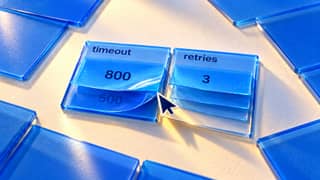
For a transient 429 or 503, the troubleshooting guide recommends exponential backoff, jitter and a maximum number of retries. It also describes automatic retry behavior in official SDKs. Invalid requests, depleted credits and denied authentication need a different response: repeatedly submitting a 400, 402 or 403 will not fix the cause. A caller can distinguish a temporary capacity problem from a request or billing problem before deciding whether to retry.
Google tools and cloud operations for SRE
From incident sources to running services
Google coverage on AIOpsSRE follows two kinds of work: understanding the material an engineer already has, and operating the services an AI application depends on. A notebook can help compare conflicting procedures. A gateway or telemetry agent changes how requests and observations move through a running system. The articles below explain those mechanisms so you can choose the part of the workflow that needs attention.
When the documents disagree
Read the worked guide
Start with comparing incident sources with NotebookLM when a runbook and an incident review give different instructions. Google's current documentation calls the product Gemini Notebook; the article retains NotebookLM in its title for readers familiar with that name. Its source-linked chat lets you follow an answer back to the relevant passage. See Google's chat documentation.
The guide's hypothetical restart example shows why the dates and conditions attached to each instruction matter. Finding both passages helps the runbook owner resolve the disagreement. A notebook built from historical documents cannot establish the service's current state, so the result belongs in a reviewed procedure rather than becoming an automatic restart instruction.
For a question about the team's operating practice, the guide to Google's free SRE books takes a different route. It connects alerting, on-call coverage and postmortems to specific chapters, then asks which staffing, access and authority assumptions need local adaptation.
Follow a slow or incomplete agent response
Read the worked guide
For traffic already passing through Apigee, the model and MCP dashboard explainer shows how to separate model latency from tool latency. The useful detail is the filter: pooled tool percentiles can change when the mix of calls changes, even if an individual tool has not slowed down. Select the affected tool and time window before following the investigation into backend traces. The Apigee dashboard reference describes the available views.
API Gateway streaming addresses another delay: waiting for a complete response before any output reaches the client. The September 29 preview report explains creation-time gateway settings and deadlines. Earlier visible text and a successfully completed answer are separate results. Streaming remains Public Preview; consult the current configuration documentation for its restrictions when deciding whether to migrate.
Retries and telemetry need their own checks
Read the worked guide
Cloud Tasks per-task retries explains how jobs on one queue can use different retry settings. An incident-summary request may expire sooner than a historical export. If a handler can change state, losing the response after a successful change also makes duplicate delivery consequential. The article follows both cases, including why an application deadline and the previous write's outcome still matter.
Use the legacy-agent migration report for existing Monitoring and Logging agents. Its disk-label example follows a measurement into the query responders actually use: incoming data can survive a migration while an old filter stops matching it. This is a different investigation from model latency, even when both appear on an operational dashboard.
Related reports cover local-model integration, database compute and storage operations. Choose them by the infrastructure you operate and the behavior you need to understand.
Identity and history
Google AI is used here as an umbrella label for Google’s AI products and research, rather than as an additional company.
1998 · Google was incorporated September 4, 1998; its celebrated September 27 birthday is a different date. Founding source
Google incorporated
The incorporation date differs from the September 27 birthday Google celebrates.
Primary sourceGoogle DeepMind formed
DeepMind and Google Brain joined as Google DeepMind.
Primary sourceGemini model family announced
The announcement introduced Gemini models and developer routes.
Primary sourceBard became Gemini
Gemini app branding, a mobile app and Gemini Advanced were announced.
Primary sourceGemini 4 Argon announced
Phased access began with trusted cyber defenders and testers; not broad public general availability.
Primary source
Who uses it, and what the numbers mean
Read dated adoption figures and their limits
- Google Workspace users evaluating AI assistance within their existing work applications, with offering-specific feature and governance checks.
- Developers and Google Cloud teams selecting multimodal API endpoints or enterprise deployment routes, with model status and access checked separately from the Gemini app.
These are dated vendor-reported figures. Populations and units differ; they are neither current audited counts nor a market-share ranking.
950 million Gemini app monthly active users
· Gemini application population reported in Alphabet Q2 remarks.
Vendor-reported app MAU, not all Google AI users, paid subscribers or API users.
Original metric and contextMore than 9 million Developers building each month
· Developers using Google models across APIs and key developer products.
Broader ecosystem metric; not necessarily Gemini API-only developers or a population to add to app MAU.
Original metric and contextAnnounced direction
Read announcements and availability qualifications
These statements describe the dated announcement and its audience. An intention does not establish that a feature subsequently shipped.
2026-09-30 · announced intention
Argon access began with trusted cyber defenders and testers. Expansion to paid API customers and Google AI Ultra subscribers was contemplated after safeguards work; no firm broad-release date was supplied.
Announcement or documentation
Sources, unknowns and review scope
Operational documentation reviewed ; the company-history, adoption and announcement snapshot was reviewed . This is a documentation-based reference. Products were not hands-on tested and vendor claims were not independently audited.
- No deduplicated Google AI users total was established.
- Guaranteed timing for broad Argon access was not established.
- Specific catalog model statuses, app plans and Workspace entitlements require separate checks; this profile does not certify every model as generally available.
Primary source directory
- Google incorporation and birthday
- Google DeepMind organization
- Gemini model launch
- Bard to Gemini
- Checked API model catalog
- Q2 adoption and ecosystem overview
- Argon phased access and intentions
- platform comparison
- Interactions API
- caching documentation
- Gemma
- activity and privacy controls
- Gemini API terms
- enterprise-platform data guidance
- privacy notice
- rate limits
- billing guide
- troubleshooting guide
- deprecation registry
- September 2026 release notes