ExplainerAI in production
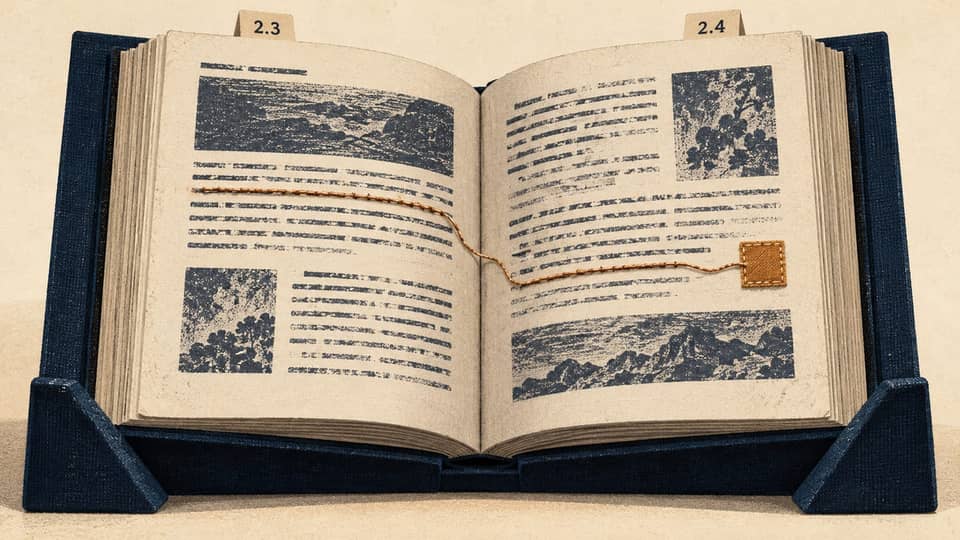
PulsarLM keeps context small by dropping old token pages
PulsarLM removes low-attention pages rather than summarizing them. A synthetic archive-retention case explains what a local agent’s recall trial must inspect.
Guides, news and explanations about AI and reliable systems.
PulsarLM removes low-attention pages rather than summarizing them. A synthetic archive-retention case explains what a local agent’s recall trial must inspect.
Build a local, synthetic citation check that exposes wrong-version evidence while keeping interpretation, source freshness and action permission separate.
Understand the model marketplace and gateway, compare chat and API workflows, and choose a useful route through its models, providers, costs and privacy controls.
Instinct brings personal tasks into connected services. A hypothetical booking and notification worker show how permission, provider confirmation and uncertain results affect what happens next.
Kimi K3 can keep a larger incident record in view. Its practical value depends on evidence handling, agent integration and the cost of useful investigation.
A synthetic order-service incident follows a shared handoff through page edits, new findings and shift change, including the review and access work involved.
Meet Pi, the open-source terminal agent built for people who want to shape their tools. Learn its history, uses, setup, model choices, costs and customization.
OpenShell can stop an agent after Kubernetes has accepted its scaling request. Recovery then depends on the Deployment state, available replicas and customer-facing result.
A missing response can leave a worker already created. Durable operation IDs and the destination’s idempotency contract let a replacement executor recover the original request.
Build repeatable cases and check recovery independently, with a runnable Python grader.
Separate detection from response and find delays that an improving average can conceal.
Separate a completed task from evidence that the underlying risk was reduced.